Why Digital Twin and Game Environment Artists Need the Same Data Center Kit
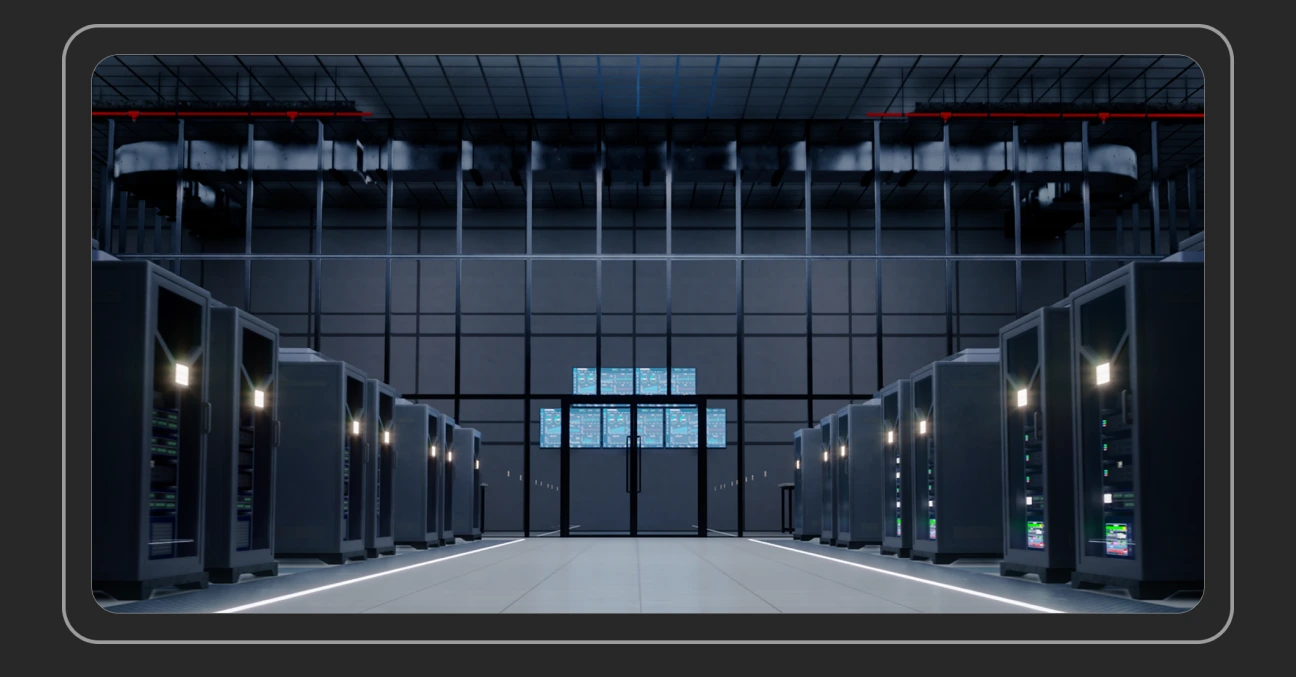
Data centers are one of those environments that look deceptively simple until you actually try to model one convincingly. It’s not just server racks it’s the cable ladders running overhead, the PDU units and UPS systems keeping everything powered, the HVAC ductwork keeping it cool, the raised flooring underneath, and the patch panels tying it all together. Miss any one of those layers and a data center scene reads as a room full of black boxes instead of a facility that actually makes sense.
We built the Modular Data Center Environment Pack to cover that full stack in one kit 50+ modular meshes across server and network hardware, power and electrical systems, cooling and HVAC, and facility-level dressing, all sharing a consistent PBR material workflow so they read as one coherent space rather than assets from five different packs bolted together.
What’s in the Pack, by System
Everything is organized by the systems an actual data center needs, which makes it easier to build a convincing space in layers rather than guessing what’s missing:
Server & Network Equipment
- Server Racks
- KVM Consoles
- Network Switches
- Patch Panels
- Storage Systems
- PDU Units
- UPS Units
Power & Electrical Systems
- Electrical Panels
- Power Distribution Equipment
- Cable Management Components
- Cable Ladders
- Supporting Electrical Assets
Cooling & HVAC
- HVAC Ducts
- Cooling Infrastructure
- Technical Facility Components
Facility & Supporting Assets
- Raised Flooring
- Office Furniture
- Fire Safety Equipment
- Doors and Supporting Facility Elements
- Additional Data Center Environment Assets
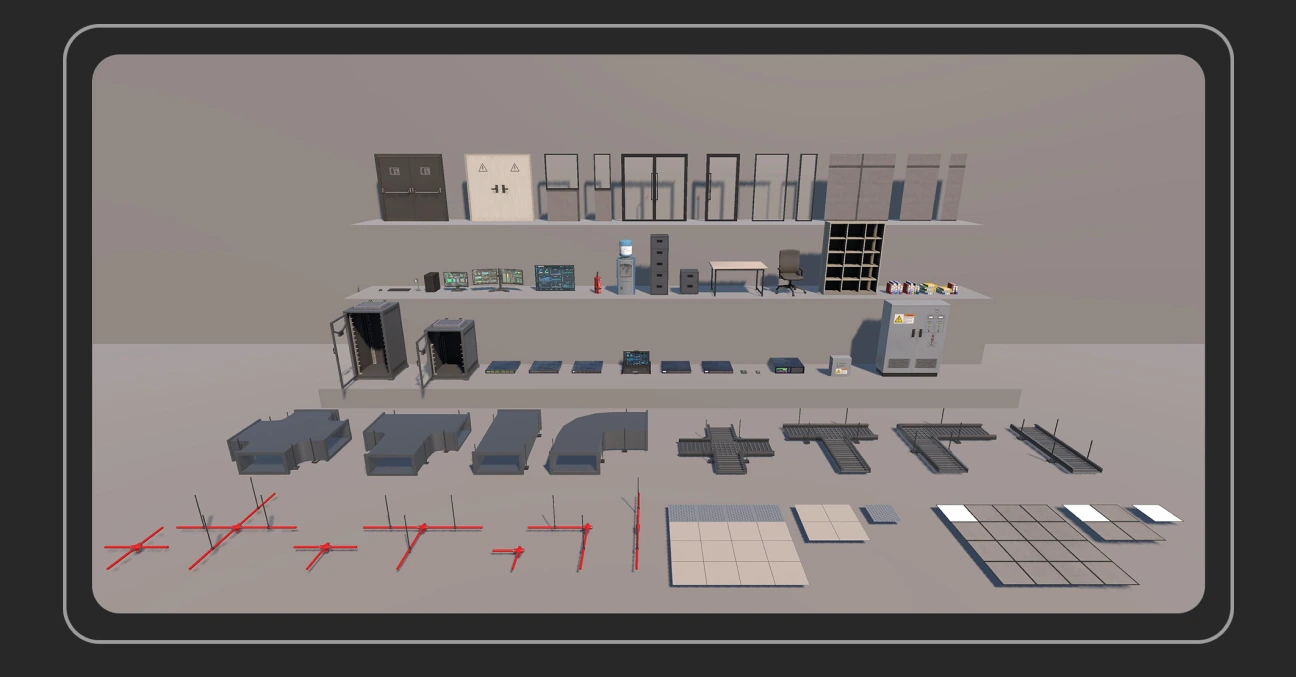
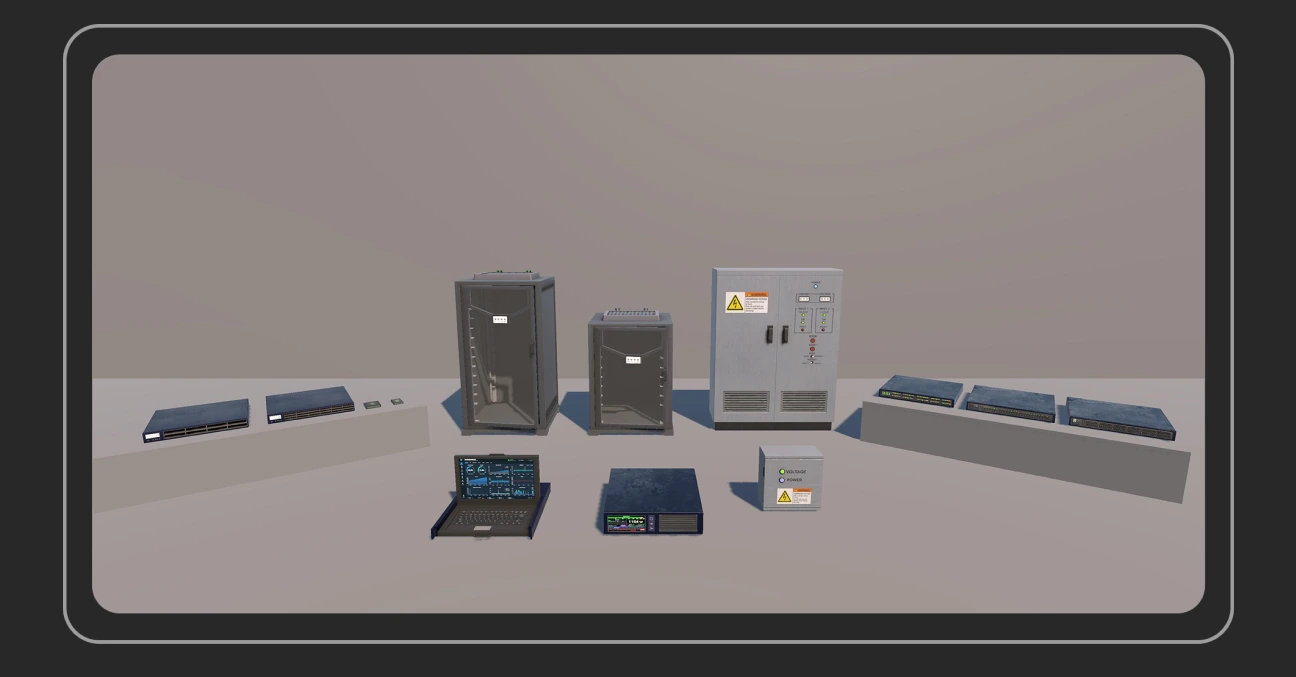
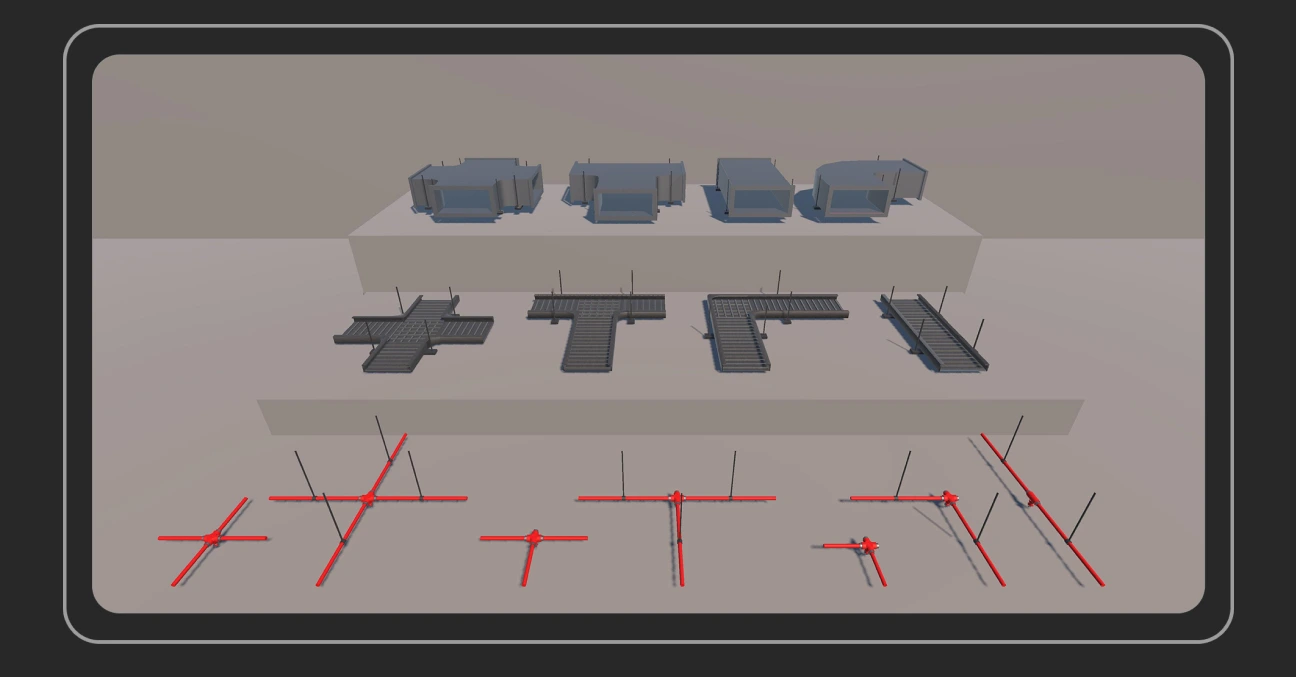
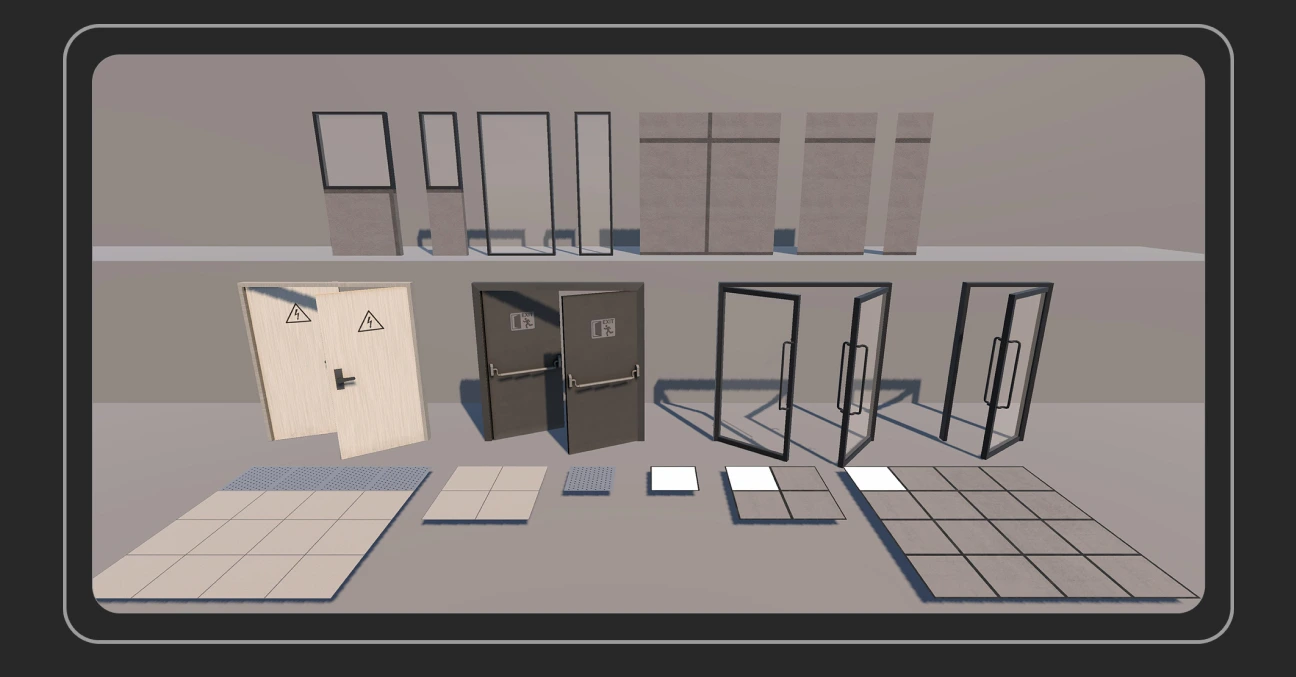
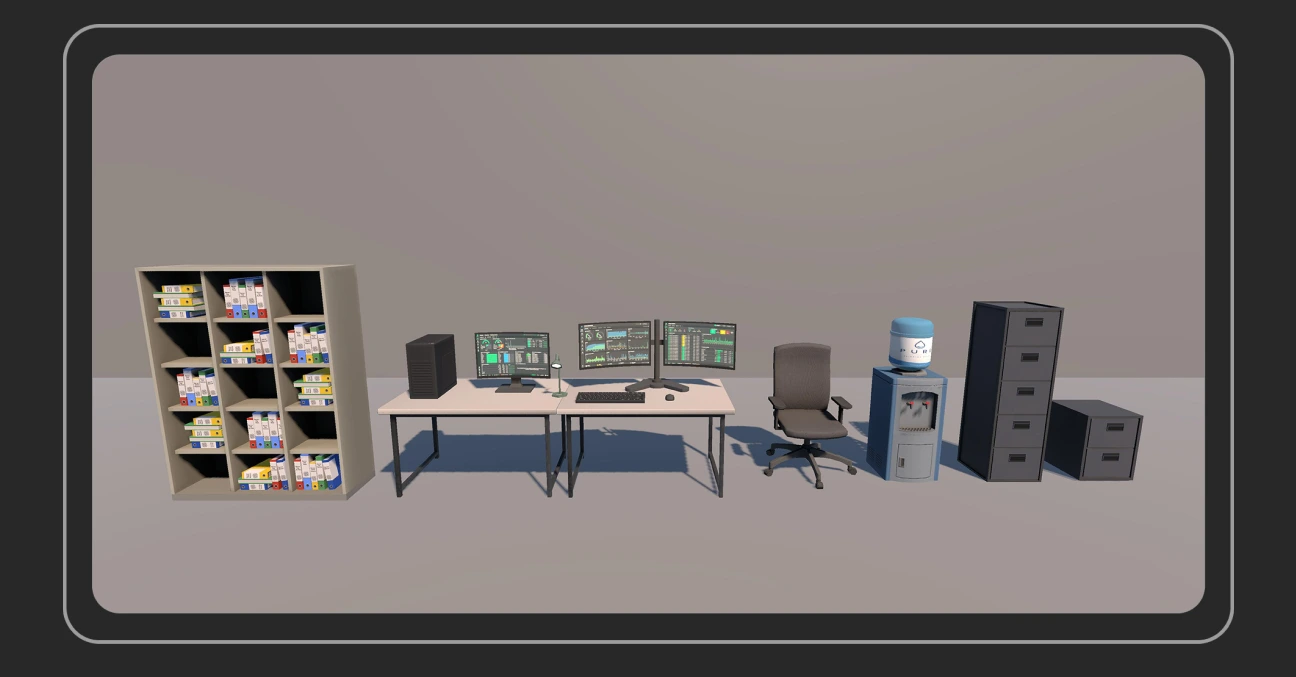
That electrical and cooling layer is usually where data center scenes fall apart it’s easy to find a server rack model, much harder to find convincing cable ladders and HVAC ductwork that actually match it in style and scale. Having all of it sourced from the same kit means those details are consistent instead of visibly mismatched.
Built for More Than One Kind of Project
This pack sits at an intersection that doesn’t come up often: the same asset that works for a game environment also needs to hold up in an architectural visualization render, and increasingly, in a real-time Digital Twin of an actual facility. Those are three different bars to clear game environments need to be fast and stylized-enough, ArchViz needs to look convincing under studio lighting, and Digital Twin work needs to represent real equipment layouts accurately enough to be useful for planning.
The optimized low-poly geometry (2 to 2,200 triangles per mesh, depending on the asset) is what makes the real-time and Digital Twin use cases actually viable a lot of visualization-focused asset packs are built for offline rendering and choke the moment you try to bring them into a real-time engine or viewer at any scale. This one is deliberately kept lean enough to populate a full server room without the triangle count spiraling out of control.
Consistent PBR, Not Assorted Textures
Materials and textures run through a shared PBR workflow 10+ unique materials and 10+ unique textures at 2048×2048 up to 4096×4096 resolution, applied consistently across the whole collection. That consistency matters more here than in a lot of environment packs: a data center scene lives or dies on whether the metal server racks, the cable insulation, the flooring, and the electrical housings all look like they belong to the same lighting and material language. Assorted textures from different sources is usually the tell that gives away a kitbashed scene.
Demo Scenes Included
Rather than handing you 50+ loose meshes and a blank viewport, the pack ships with demo scenes already assembled a useful starting point to see how the pieces are meant to go together (rack spacing, cable routing, cooling placement) before you start customizing your own layout. It’s a faster way to get oriented than reverse-engineering intended scale and spacing from individual assets alone.
Technical Specifications
| Spec | Detail |
| Created In | Blender |
| Compatible Engines | Blender, Unity and Unreal Engine |
| Blender Version | Blender 4.2+ |
| Unity Version | Unity 6.0+ |
| Unreal Engine Version | UE 5.0+ |
| File Formats | .blend, .unitypackage, Unreal Engine Project |
| Texture Resolution | 2048×2048 up to 4096×4096 |
| Materials | PBR, 10+ unique |
| Unique Meshes | 50+ |
| Unique Textures | 10+ |
| Geometry | Optimized low-poly |
| Triangle Range | 2 to 2,200 triangles per mesh |
| Demo Scenes | Included |
Where This Pack Fits
- Data center visualization and IT infrastructure visualization
- Digital Twin projects
- Architectural and industrial visualization
- Server room design and facility management visualization
- Simulation projects
- VR & AR experiences
- Real-time applications and game environment design
- Training and educational applications
Why We Built It Around Systems, Not Just a Room Full of Racks
It would have been simpler to ship a pack of server racks and call it a data center kit racks are the recognizable hero asset, and most buyers would assume that’s the bulk of the value. We didn’t, because a room of racks with nothing else isn’t a data center, it’s a room of racks. The cooling, power, and cable management systems are what make a scene read as a facility someone actually runs, and leaving them out just pushes the harder modeling work back onto whoever buys the pack. Building the full system stack up front was more work on our end, but it’s the difference between a kit that needs supplementing and one that doesn’t.
Get the Modular Data Center Environment Pack
Live now on Superhive, Fab and Unity Assetstore built for Digital Twin, Games, visualization, and real-time data center environments alike.
Browse our full catalog: