How Much Does It Cost to Make a Roblox Game in 2026?
Making a Roblox game in 2026 costs anywhere from about $10,000 for a small obby built with existing assets to $200,000 or more for a multiplayer game with custom art and a live content plan. Most commercial projects, such as a polished simulator or a round-based multiplayer game, fall somewhere between $20,000 and $80,000.
Roblox Studio is free, so none of that money goes to the engine. It goes to people’s time: scripters, 3D artists, UI designers and testers. In 2026 there are also two platform changes to plan around. Roblox added new requirements for publishing games to all ages, and it changed how much creators earn when they cash out Robux.
This guide covers pricing by game type, where the budget goes, the features that push costs up, what Roblox keeps from your revenue, and how much a game needs to earn to pay for itself.
- Roblox Game Development Cost by Game Type
- Where the Budget Actually Goes
- Five Features That Raise a Roblox Budget the Most
- Freelancer, Studio or Dedicated Team: How the Choice Changes Cost
- What Roblox Takes and What Your Game Must Earn to Pay Back
- Ongoing Costs After Launch
- How to Lower Your Roblox Game Development Cost
- Frequently Asked Questions
- Plan Your Roblox Budget Before You Build
Roblox Game Development Cost by Game Type
The table below shows typical ranges for a game built by a professional team. Treat these as planning numbers, not fixed quotes. Two games can both be called “simulators” and still differ in cost by three times, because one has trading, pets and live events and the other does not.
| Game type | What it usually includes | Estimated cost | Typical timeline |
| Simple obby or mini-game | Checkpoints, basic UI, leaderboard, mostly existing assets | $10,000 to $20,000 | 3 to 6 weeks |
| Tycoon or simulator | Core upgrade loop, data saving, game passes, a few custom models | $20,000 to $40,000 | 6 to 12 weeks |
| Mid-size multiplayer game | Round logic, matchmaking, custom maps, anti-exploit checks | $40,000 to $80,000 | 3 to 5 months |
| RPG, combat or open-world game | Quests, inventory, combat, custom characters and animation | $80,000 to $200,000 | 5 to 10 months |
| Branded or live-service game | Custom IP art, events, analytics, content roadmap | $200,000+ plus monthly LiveOps | 6 months or more |
Custom art and backend logic cause most of the price differences between these tiers. A tycoon that uses modular kits and simple UI stays near the bottom of its range. The same tycoon with a custom art style, trading and weekly updates moves to the top.
The 2026 Publishing Requirements
Publishing is where the 2026 changes come in. To make a game available to all ages, the owner needs ID verification, 2-Step Verification, and a passed content evaluation. On top of that, you pick one of these options:
- A one-time 1,000 Robux fee per game, refunded after three months if the game stays eligible
- A 100,000 Robux expedited-review fee, also refundable under the same conditions
- Two consecutive months of a Roblox Plus or Premium subscription
The refund only happens if the game is not permanently moderated for Community Standards violations during those three months. The fee itself is small, but the evaluation step adds time before your game reaches its full audience. Build that into your launch plan, especially if a brand campaign has a fixed date.
Where the Budget Actually Goes
A Roblox budget splits into a few stages. The share each one takes depends on the game, but scripting and art are almost always the two largest lines.
Game Design and Prototyping
Good teams build a grey-box prototype in Studio before any final art exists. This means basic parts, placeholder UI and the core loop working end to end. It is the cheapest point in the project to find out that the game is not fun. Changing a mechanic here costs days. Changing it after the art is finished can cost weeks.
Luau Scripting and Game Systems
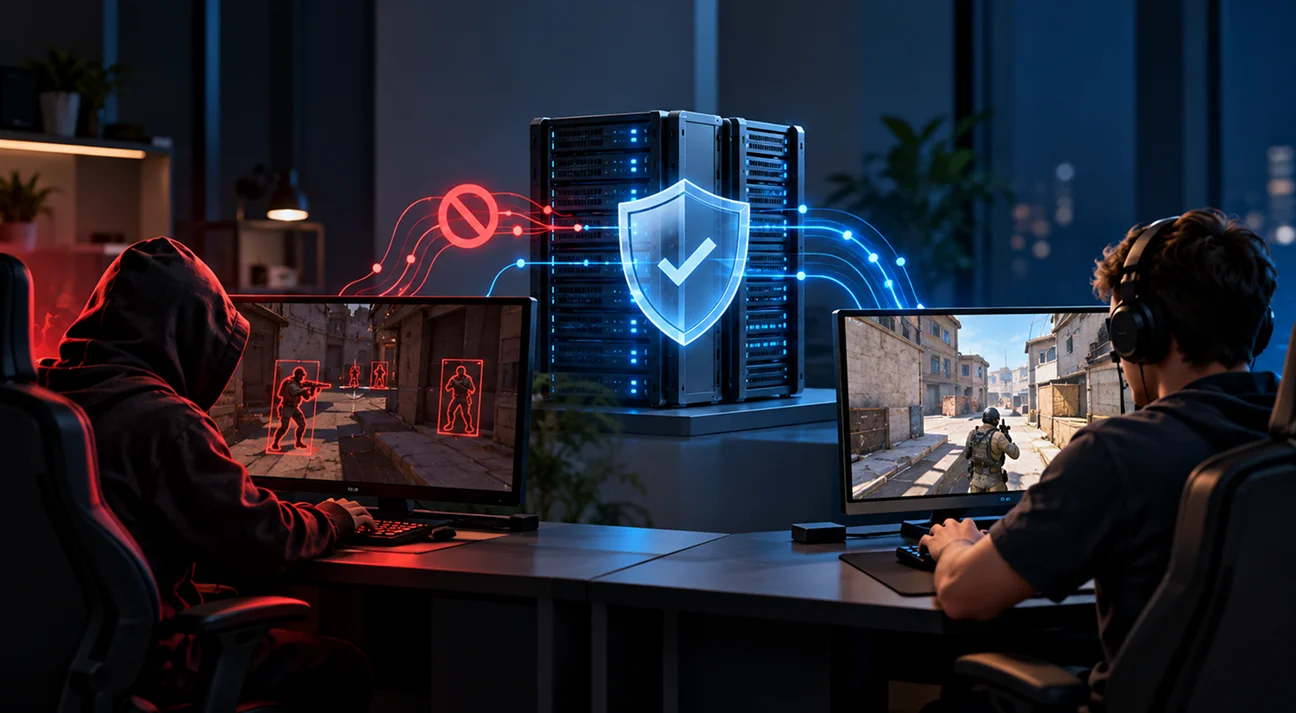
Scripting is usually the largest single cost, and it is where cheap builds tend to cut corners. A commercial Roblox game needs server-authoritative logic, which means the server decides what is true (damage, currency, item drops) and the client only displays it. Every RemoteEvent the client can fire has to be validated on the server, or exploiters will give themselves free currency within days of launch.
Data saving takes real engineering too. Player progress lives in DataStores, which have request limits and can fail. A safe save system retries failed writes, prevents two servers from writing the same player’s data at once, and handles players who leave mid-save. When this is done badly, players lose progress, and that is one of the fastest ways to lose an audience.
3D Art, Animation and VFX
Roblox games run on everything from gaming PCs to low-end Android phones. Art has to be built for the weakest device your players use. That means careful polygon budgets, texture reuse and efficient VFX. Custom characters also need rigging and animation that works with Roblox’s avatar system. Using marketplace or modular assets keeps art costs low. A fully custom world with its own art style is often the most expensive part of a branded game.
UI/UX for Touch, Mouse and Controller
Roblox players switch between phones, tablets, PCs and consoles, so every menu has to work with touch, mouse and a controller on screens of very different sizes. The in-game shop deserves extra design time because its layout directly affects how many players buy game passes.
QA Across Devices
Testing a Roblox game means testing on real phones, not just in Studio. Performance problems often only appear on older devices with limited memory. Multiplayer bugs also show up only when many real players join the same server. Budget for device testing and a closed playtest before launch.
Five Features That Raise a Roblox Budget the Most
Some features look small on a feature list but take far more time than their size suggests.
Trading Systems
Trading between players is a common target for item duplication exploits. The logic has to be written so that an item can never exist in two inventories at once, even when a server crashes mid-trade. That requires careful DataStore handling and extensive testing.
Combat with Hit Detection
Fast combat has to feel responsive on the attacker’s screen while the server still checks that the hit was possible. Balancing that against network lag takes iteration, and it also needs animation and VFX work for every attack.
Pets and Collectibles
Pet systems multiply art costs because every pet needs a model, animations and rarity variations. They also need drop-rate balancing so the economy does not break.
Live Events
Timed events need content made in advance, scheduled releases, and often cross-server messaging so every server starts at the same moment. Each event is essentially a small release with its own QA pass.
Custom Avatars and Character Systems
Anything that changes how player characters look or move has to work with Roblox’s avatar rigs and still perform well on mobile.
If budget is tight, launch without the most expensive of these features and add them once the game proves it can hold players.
Freelancer, Studio or Dedicated Team: How the Choice Changes Cost
Who builds the game changes both the price and the risk.
| Option | Best for | Cost level | Main risk |
| Solo freelancer | Prototypes, small fixes, simple obbies | Low | One person covers scripting, art and QA |
| Freelancer group you assemble | Tycoons and simulators on a budget | Medium | You manage coordination and quality |
| Game development studio | Full production, branded games, LiveOps | Higher | Higher upfront cost |
| Dedicated hired developers | Teams that already have a producer | Varies by team size | You still own project management |
On Roblox, freelancers sometimes ask for payment in Robux or a percentage of revenue instead of cash. Revenue share lowers your upfront cost, but it can become expensive if the game succeeds, and it is hard to enforce without a clear written agreement.
A studio costs more at the start, but you get scripters, artists and testers who already work together, plus one person accountable for the schedule. If you already have a producer and only need extra hands, you can hire Roblox developers as a dedicated team and keep management in-house.
What Roblox Takes and What Your Game Must Earn to Pay Back
This is the part most cost guides skip, and it matters for every budget decision.
Marketplace Fee and DevEx Rates in 2026
When a player buys a game pass or developer product, Roblox keeps 30% of the Robux, and 70% goes to the creator. Those earned Robux convert to US dollars through the Developer Exchange (DevEx) program. In 2026 there are three rates:
- Standard rate: $0.0038 per earned Robux, for Robux earned on or after September 5, 2025
- US 18+ rate: $0.0054 per earned Robux, for qualifying purchases from US players verified as 18 or older, effective June 8, 2026
- Legacy rate: $0.0035 per earned Robux, for balances earned before September 5, 2025
A Worked Example
A player buys a 500 Robux game pass. The creator receives 350 Robux. At the standard rate, that is $1.33. If the purchase qualifies for the US 18+ rate, it is about $1.89.
Now apply that to a budget. A $50,000 game needs about 13.2 million earned Robux to pay back at the standard rate. Because the creator keeps 70%, players need to spend about 18.8 million Robux in the game before the project breaks even, and that is before any post-launch costs.
Cashing out through DevEx also has requirements. The account needs at least 30,000 earned Robux, must be in good standing, and needs a tax form on file (W-9 for US taxpayers, W-8 for others).
These numbers are the strongest argument for starting with a smaller first version. A $15,000 MVP that proves players stay and spend is a much safer bet than an $80,000 launch that has never been tested.
Ongoing Costs After Launch
Most successful Roblox games keep releasing updates for years after launch. The budget does not stop when the game goes live. Plan for these recurring costs before you start:
- New content, seasonal events and balance changes
- Bug fixes, including fixes after Roblox platform updates change how something behaves
- Community moderation for your Discord server and group
- Analytics review, so updates are based on retention data rather than guesses
- Marketing, including Roblox ads, sponsored placements and creator partnerships
- New thumbnails and icons to keep click-through rates up
A small live game often runs with one scripter and one part-time artist on a monthly retainer. A large live-service game can need a full team. Whatever the size, decide the monthly budget before launch, because a game that stops updating usually starts losing players.
How to Lower Your Roblox Game Development Cost
You can spend less without shipping a weaker game by making a few decisions early.
Start with one core loop and test it with real players before adding systems. If players do not come back to the prototype, more features will not fix that.
Launch with one map. More maps multiply art, lighting, optimization and testing work. Add the next map as an update.
Build content as data. When items, pets and upgrades are defined in configuration modules rather than hard-coded, adding new content later needs an artist and a short test rather than new code.
Reuse modular asset kits for environments and save custom art for the things players look at most, such as characters, pets and the shop.
Keep monetization simple at launch. A few well-priced game passes and one developer product are easier to balance than a full economy on day one.
If you are still shaping the concept, our guide on how to make a Roblox game from scratch walks through the build process, and our list of Roblox game ideas can help you pick a genre that fits your budget. Looking at popular Roblox games is also useful for seeing which features successful titles launched with and which they added later.
Frequently Asked Questions
No. Building, scripting and testing a game in Roblox Studio needs no Robux. The only Robux cost in 2026 is the publishing requirement for reaching all ages, which is a refundable 1,000 Robux fee unless you have held a Plus or Premium subscription for two consecutive months.
A simple obby or mini-game built by a professional usually costs $3,000 to $12,000. The price depends mostly on how much custom art it needs and how polished the UI and progression feel.
No. Roblox hosts game servers for free. You only pay for servers if your game connects to your own external backend.
Rates vary widely by experience, region and specialty. Some developers charge hourly, some quote per feature, and some ask for Robux or revenue share. For a commercial game, the most reliable number comes from a quote based on a written feature list.
A simple game can take three to six weeks. A tycoon or simulator usually takes six to twelve weeks. Multiplayer games, RPGs and branded experiences take anywhere from three months to a year, depending on scope.
Scripting the game’s systems, especially data saving, multiplayer logic and exploit protection, is usually the largest cost. Custom art comes second, and for branded games with their own art style it can be the largest.
Plan Your Roblox Budget Before You Build
The cost of a Roblox game is set by its scope, not by the engine. A clear feature list, a tested core loop and a realistic post-launch plan will do more for your budget than any discount. Run the break-even math early too, because it tells you how large your first version should be.
300Mind builds Roblox games from concept to launch and supports them afterward, covering game design, Luau scripting, 3D art, UI, testing and LiveOps. If you have a game idea or a project already in progress, talk to our Roblox developers about scope and get an estimate based on what your game actually needs.