Unreal Engine 5 for Digital Twins: A Complete Enterprise Guide
Most digital twins today function like advanced dashboards. They collect data, display charts, and monitor systems, but often fail to provide a clear understanding of what is happening inside complex environments.
Modern industries need more than data visualization. Manufacturing plants, smart cities, energy systems, and infrastructure projects generate vast amounts of real-time data, requiring faster and more intuitive ways to analyze, predict, and test decisions before acting in the real world.
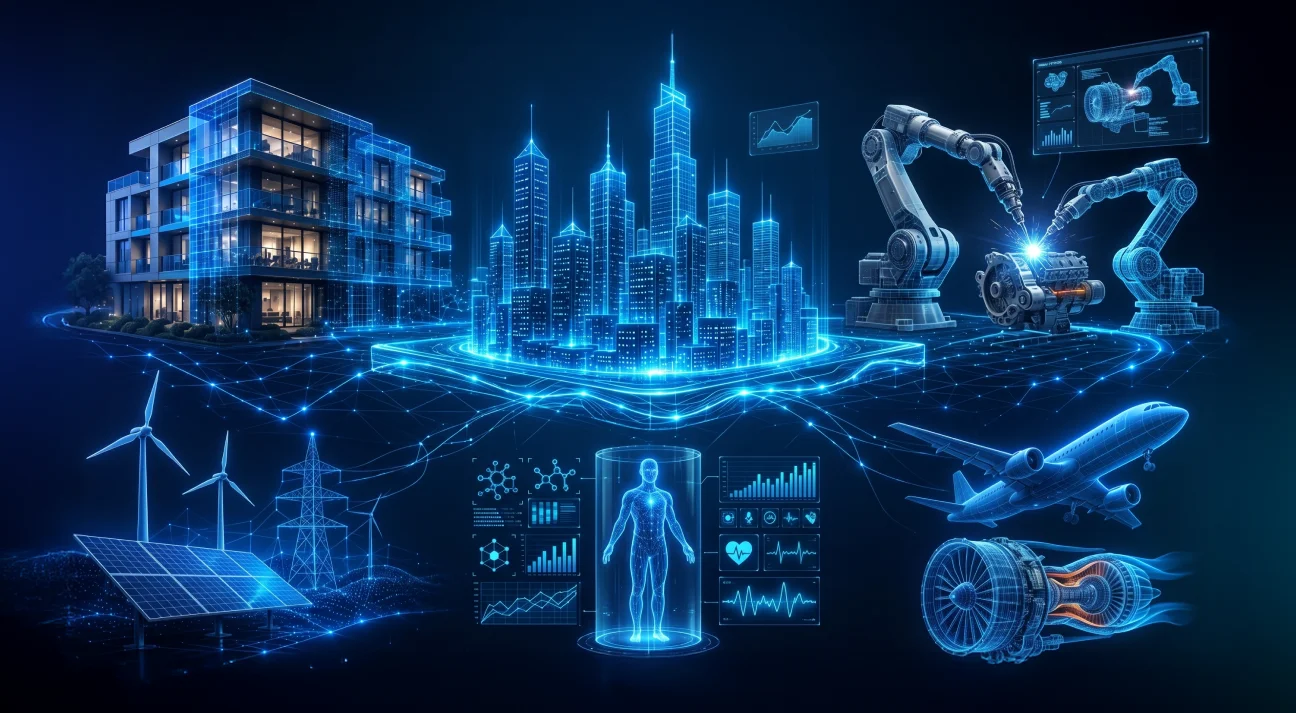
This is where Unreal Engine 5 is transforming digital twins. Instead of static interfaces, UE5 creates immersive, interactive environments powered by live operational data. Teams can explore facilities, monitor assets, simulate scenarios, and collaborate in shared 3D spaces with greater clarity and confidence.
Digital twins are no longer just visualization tools. They are evolving into intelligent Digital Twin solutions that help organizations monitor, simulate, and optimize real-world operations. With real-time rendering, live data integration, AI-driven simulation, and photorealistic environments, Unreal Engine 5 enables smarter decisions and actionable insights. As adoption grows, organizations increasingly evaluate the best Digital Twin development companies to build scalable solutions aligned with their operational and long-term goals.
- What is a Digital Twin?
- Why Build Digital Twins with Unreal Engine 5?
- Key Features of Unreal Engine 5 That Power Digital Twins
- Steps to Build a Digital Twin with Unreal Engine 5
- Use Cases of Unreal Engine 5 Digital Twins
- Business Benefits of Digital Twins Built with Unreal Engine 5
- Challenges Enterprises Face While Building Digital Twins
- Best Practices for Building Digital Twins in Unreal Engine 5
- Why Partner with 300Mind
- Final Take
- FAQs
What is a Digital Twin?
A digital twin is a real-time virtual representation of a physical asset, environment, or system connected to live operational data. It helps businesses monitor, simulate, and optimize real-world operations inside an interactive digital environment.
But today, digital twins are no longer limited to dashboards and monitoring tools.
Modern enterprises need systems that can do more than display data. They need environments where teams can visualize operations in real time, predict issues before they occur, test scenarios safely, and make faster decisions with greater confidence.
This is where next-generation digital twins are creating real business value.
Why Build Digital Twins with Unreal Engine 5?
Digital twins are becoming far more advanced than traditional monitoring systems. Businesses today need platforms that can combine real-time data, immersive visualization, simulation, and collaboration into a single operational environment.
This is why Unreal Engine 5 is emerging as one of the most powerful platforms for enterprise digital twins.
Originally known for high-end gaming and cinematic experiences, Unreal Engine 5 is now widely adopted across manufacturing, smart cities, automotive, infrastructure, energy, and industrial operations.
1. Photorealistic Real-Time Visualization
One of the biggest advantages of Unreal Engine 5 is its ability to create highly realistic real-time environments.
Features like Nanite and Lumen allow businesses to build digital twins with cinematic-quality lighting, textures, reflections, and geometry. This level of realism helps teams understand operational environments more clearly and identify issues faster.
Instead of analyzing disconnected dashboards and static reports, stakeholders can explore facilities, production lines, infrastructure systems, and operational spaces inside immersive 3D environments.
For industries like manufacturing, construction, automotive, and smart infrastructure, this improves communication, planning, and operational visibility significantly.
2. Real-Time Data Integration
A digital twin is only valuable if it stays connected to real-world systems.
Unreal Engine 5 supports live data ingestion from: IoT devices, sensors, SCADA systems, APIs,
cloud platforms, and enterprise databases.
This allows businesses to visualize real-time operational conditions directly inside the virtual environment.
For example, teams can monitor:
- Machine performance,
- Equipment health,
- Traffic movement,
- Environmental conditions,
- Energy usage,
- and operational alerts in real time.
UE5 helps centralize complex operational data into one interactive environment, making it easier for teams to analyze and respond quickly.
3. Interactive Simulations and Scenario Testing
Traditional enterprise systems mainly show current operational status. Unreal Engine 5 allows businesses to go further by testing future scenarios through simulation.
Organizations can simulate:
- Factory workflows,
- Robotics movement,
- Emergency response situations,
- Traffic systems,
- Logistics operations,
- and infrastructure changes before implementing them in the real world.
This reduces operational risk, improves planning accuracy, and helps teams optimize processes more efficiently.
Georgia-Pacific, in collaboration with SAS and Unreal Engine, uses digital twin simulations to model factory operations and test production strategies in virtual environments before deploying them physically.
4. Multi-User Collaboration
Modern enterprise operations involve distributed teams across locations, departments, and time zones.
UE5 enables multiple users to interact inside the same digital twin environment simultaneously. Teams can collaborate in shared virtual spaces for:
- Remote inspections,
- Engineering reviews,
- Operational planning,
- Training,
- and decision-making.
This creates a more intuitive and collaborative experience compared to traditional dashboards and spreadsheets.
According to Unreal Engine, real-time technology helps teams “see the same thing and make decisions faster,” improving communication and reducing costly operational delays.
5. Cross-Platform Experiences
Unreal Engine 5 supports deployment across multiple platforms, making digital twins more accessible across organizations.
Businesses can deploy digital twins through:
- Desktop applications,
- VR headsets,
- AR devices,
- Web browsers,
- Touchscreens,
- and mobile devices.
Technologies like Pixel Streaming also allow high-quality UE5 experiences to run through browsers without requiring powerful local hardware.
This makes enterprise digital twins easier to share across internal teams, clients, field operators, and stakeholders.
6. Scalability for Large Environments
Many enterprise environments are massive and highly complex.
Factories, airports, industrial plants, ports, smart cities, and infrastructure systems require platforms capable of handling large-scale environments without compromising performance.
Unreal Engine 5 is designed to support expansive real-time worlds while maintaining visual fidelity and smooth performance. This makes it well suited for enterprise-scale digital twin applications where scalability is critical.
As digital twins continue evolving toward AI-driven operational intelligence, Unreal Engine 5 is becoming more than a visualization engine. It is emerging as a foundation for immersive, interactive, and intelligent enterprise systems.
Key Features of Unreal Engine 5 That Power Digital Twins
Unreal Engine 5 offers a powerful set of technologies that help businesses build immersive, scalable, and real-time digital twins. From importing complex industrial assets to enabling live operational monitoring and interactive simulations, UE5 provides the tools needed to create next-generation enterprise environments.
These features are one of the main reasons why industries like manufacturing, smart infrastructure, automotive, construction, and energy are increasingly adopting Unreal Engine for digital twin development.
1. 3D Model Import with Datasmith
Creating a digital twin starts with building an accurate virtual representation of the physical environment.
Unreal Engine’s Datasmith pipeline simplifies the import of complex 3D assets from popular CAD, BIM, and design software such as:
- Revit,
- SolidWorks,
- Rhino,
- SketchUp,
- and 3ds Max.
3D modelling in unreal engine helps businesses bring existing industrial and architectural data directly into Unreal Engine with minimal manual rework.
For enterprises, this speeds up development workflows and improves accuracy when recreating factories, facilities, buildings, machinery, or infrastructure systems inside the digital twin.
2. Nanite Virtualized Geometry
Large-scale digital twins often involve highly detailed environments with millions or even billions of polygons.
Nanite allows Unreal Engine 5 to render extremely high-detail geometry in real time without heavy manual optimization. This is especially useful for:
- Industrial facilities,
- Smart cities,
- LiDAR scans,
- Photogrammetry assets,
- and complex infrastructure models.
Businesses can maintain visual realism while still achieving smooth real-time performance.
3. Lumen Global Illumination
Lighting plays an important role in making digital environments feel realistic and operationally accurate.
Lumen is Unreal Engine 5’s real-time global illumination and reflection system. It dynamically simulates how light interacts with surfaces and environments.
For digital twins, this improves:
- Environmental visualization,
- Training simulations,
- Architectural walkthroughs,
- and operational analysis.
Realistic lighting also helps stakeholders better understand spaces and identify operational details more effectively.
4. Blueprint Visual Scripting
Blueprint Visual Scripting allows developers and technical teams to create logic and interactions visually without writing extensive code.
In digital twins, Blueprints can be used to:
- Connect live data to machines,
- Trigger operational events,
- Automate behaviors,
- Create interactive controls,
- and simulate workflows.
This speeds up prototyping and makes Unreal Engine development more flexible for enterprise applications.
5. Live Data Ingestion and API Integration
A digital twin becomes truly valuable when it connects with real-world operational systems.
Unreal Engine supports live data ingestion through:
- APIs,
- IoT platforms,
- MQTT,
- OPC-UA,
- Cloud services,
- and enterprise databases.
This allows the virtual environment to update continuously based on real-time operational data.
For example, businesses can monitor:
- Equipment performance,
- Machine temperatures,
- Traffic conditions,
- Energy usage,
- and production metrics directly inside the digital twin.
6. UI Creation and Interactive Dashboards
Digital twins need user-friendly interfaces that allow teams to interact with complex operational systems easily.
Unreal Engine includes UI creation tools that help developers build:
- Dashboards,
- Control panels,
- Alerts,
- Data overlays,
- Heatmaps,
- and monitoring systems directly inside the 3D environment.
This creates a more intuitive experience compared to traditional dashboards and disconnected enterprise tools.
7. World Partition for Large-Scale Environments
Enterprise digital twins often involve extremely large environments.
World Partition helps Unreal Engine manage massive virtual worlds efficiently by dynamically loading only the required sections of the environment in real time.
This is critical for:
- Smart cities,
- Industrial campuses,
- Airports,
- Logistics hubs,
- and infrastructure simulations.
It improves scalability while maintaining performance across complex environments.
8. Pixel Streaming for Remote Accessibility
Not every user accessing a digital twin has high-end hardware. Pixel Streaming allows Unreal Engine applications to run on remote servers while streaming the experience directly through a web browser.
This makes high-quality digital twins accessible across:
- Remote teams,
- Field operators,
- Enterprise stakeholders,
- and clients without requiring expensive local systems.
It also improves collaboration and accessibility across organizations.
9. Procedural Content Generation (PCG)
Building large digital environments manually can take significant time and effort. Procedural Content Generation helps automate the creation of scalable environments and assets inside Unreal Engine.
PCG can be used to generate:
- Urban layouts,
- Vegetation,
- Road systems,
- Industrial assets,
- and environmental details more efficiently.
For enterprise-scale digital twins, this helps accelerate development while reducing repetitive manual work.
Together, these technologies make Unreal Engine 5 far more than a visualization platform. They enable businesses to build intelligent, connected, and immersive digital twins capable of supporting real-time monitoring, simulation, collaboration, and predictive decision-making.
Steps to Build a Digital Twin with Unreal Engine 5
Building a digital twin with Unreal Engine 5 involves much more than creating a 3D environment. A successful digital twin combines real-world assets, live operational data, simulation systems, and immersive visualization into a connected real-time ecosystem.
Here’s how businesses typically build enterprise-scale digital twins with Unreal Engine 5.
Step 1. Define the Purpose and Business Objectives
Every successful digital twin starts with a clear business goal.
Before development begins, organizations need to identify: the operational problems they want to solve, the systems they want to monitor, and the outcomes they expect from the digital twin.
Some common objectives include:
- Predictive maintenance,
- Production optimization,
- Smart infrastructure monitoring,
- Remote operations,
- Safety training,
- and energy management.
This step is important because the purpose of the digital twin directly impacts the data architecture, simulation requirements, user experience, and overall system design.
Without a defined business objective, digital twins often become visualization projects with limited operational value.
Step 2. Capture Real-World Data and Assets
The next step is collecting the real-world information needed to recreate the physical environment digitally. This includes both: 3D spatial assets and operational data sources.
Teams typically gather:
- CAD and BIM models,
- LiDAR scans,
- GIS data,
- Machine assets,
- Drone scans,
- and facility layouts.
At the same time, organizations identify the live systems that will feed operational data into the digital twin, such as:
- IoT sensors,
- SCADA systems,
- ERP platforms,
- Production systems,
- and environmental monitoring tools.
The quality of the digital twin depends heavily on the accuracy and structure of this data.
Step 3. Build and Optimize the 3D Environment in UE5
Once the data and assets are ready, unreal developers begin building the virtual environment inside UE5.
Using tools like Datasmith, teams can import complex industrial and architectural models directly into UE5.
During this stage, developers:
- Optimize assets,
- Organize environments,
- Create interactive elements,
- and prepare the digital twin for real-time performance.
Features like: Nanite, Lumen, and World Partition help Unreal Engine handle large-scale environments with high visual quality and smooth performance.
The goal of 3D environment design is to create an immersive environment that is both realistic and operationally functional.
Step 4. Connect Live Data Streams and Enterprise Systems
A digital twin becomes truly intelligent when it connects to real-time operational systems.
In this stage, Unreal Engine is integrated with:
- IoT platforms,
- APIs,
- Cloud systems,
- MQTT,
- OPC-UA,
- Databases,
- and enterprise software.
This allows live operational data to update the digital environment continuously.
For example, businesses can monitor:
- Machine performance,
- Equipment status,
- Traffic movement,
- Energy consumption,
- and environmental conditions directly inside the digital twin.
Real-time synchronization helps teams respond faster and make better operational decisions.
Step 5. Enable Real-Time Simulation and Intelligence
After live data integration, businesses can add simulation and predictive capabilities to the digital twin.
This transforms the system from a monitoring platform into an operational intelligence platform.
Organizations can simulate:
- Production workflows,
- Emergency scenarios,
- Traffic systems,
- Robotics behavior,
- and equipment failures before making changes in the real world.
Some digital twins also integrate AI and analytics systems to:
- Predict failures,
- Optimize operations,
- Automate workflows,
- and improve forecasting accuracy.
This helps businesses reduce risk, improve planning, and increase operational efficiency.
Step 6. Visualize, Interact, and Collaborate in UE5
The final step is creating interactive experiences that allow teams to explore and use the digital twin effectively.
Businesses can build:
- Operational dashboards,
- Command centers,
- VR training environments,
- Immersive walkthroughs,
- and multi-user collaboration spaces inside Unreal Engine 5.
Teams can:
- Monitor operations in real time,
- Analyze simulations,
- Interact with systems,
- and collaborate remotely inside shared 3D environments.
Technologies like Pixel Streaming also make digital twins accessible through web browsers and mobile devices without requiring high-end hardware.
This is where Unreal Engine 5 becomes especially valuable. It transforms complex operational systems into immersive and intuitive experiences that improve visibility, collaboration, and decision-making across the enterprise.
Use Cases of Unreal Engine 5 Digital Twins
Unreal Engine 5 digital twins help businesses create immersive and intelligent operational environments across industries. By combining real-time data, simulation, and interactive visualization, organizations can improve operational visibility, optimize workflows, and make faster decisions at scale.
From smart factories and connected cities to logistics hubs and energy infrastructure, UE5-powered digital twins are enabling enterprises to move beyond static dashboards toward real-time operational intelligence.
| Industry | What the Digital Twin Simulates | How Unreal Engine 5 Helps |
| Architecture, Engineering & Construction (AEC) | Construction progress, building operations, facility lifecycle, occupancy flow | BIM visualization, immersive walkthroughs, real-time collaboration, photorealistic environments |
| Smart Manufacturing | Production workflows, machine health, robotics movement, predictive maintenance | Real-time factory visualization, operational simulations, interactive monitoring |
| Smart Cities & Urban Planning | Traffic systems, infrastructure behavior, utilities management, emergency response | Large-scale city visualization, live simulations, interactive planning environments |
| Automotive & Mobility | Autonomous driving, vehicle behavior, mobility systems, driver interaction | Realistic simulation environments, HMI visualization, mobility experience design |
| Energy & Utilities | Grid performance, power generation, equipment health, energy consumption | Industrial monitoring, simulation testing, remote operational visibility |
| Airports, Ports & Logistics | Cargo movement, warehouse operations, fleet tracking, passenger flow | Scalable logistics visualization, operational simulations, remote collaboration |
Business Benefits of Digital Twins Built with Unreal Engine 5
As digital twins evolve from visualization tools into intelligent operational systems, businesses are seeing measurable improvements in efficiency, collaboration, planning, and decision-making.
Unreal Engine 5 helps organizations build immersive and data-driven digital twins that not only improve operational visibility but also deliver real business value across large-scale environments and complex systems.
Here are some of the key business benefits of building digital twins with Unreal Engine 5.
| Business Benefit | How It Creates Value |
| Reduced Operational Costs | Helps optimize workflows, improve resource utilization, reduce manual processes, and lower operational inefficiencies |
| Faster Decision-Making | Provides real-time visibility into operations through immersive and interactive environments |
| Predictive Maintenance | Uses live operational data to identify equipment issues early and reduce unexpected failures |
| Reduced Downtime | Enables proactive monitoring and simulation-based testing to prevent operational disruptions |
| Safer Training Environments | Allows teams to practice hazardous or complex scenarios safely inside virtual environments |
| Improved Collaboration | Creates shared real-time environments for remote teams, stakeholders, engineers, and operators |
| Faster Product and Facility Optimization | Helps businesses test layouts, workflows, systems, and operational changes before physical implementation |
| Reduced Risk Before Real-World Implementation | Enables scenario testing and simulation to identify potential operational issues early |
For decision-makers, one of the biggest advantages of UE5-powered digital twins is the ability to understand complex operational systems visually and interactively instead of relying only on dashboards and disconnected reports.
This improves communication across technical and non-technical teams while helping organizations make faster, more confident business decisions.
Challenges Enterprises Face While Building Digital Twins
While digital twins offer significant business value, building enterprise-scale systems is far more complex than creating a 3D visualization. Successful digital twins require real-time connectivity, scalable infrastructure, accurate data pipelines, and optimized environments capable of handling continuous operational updates.
Without the right technical foundation and implementation strategy, businesses often face several challenges during development and deployment.
1. Data Integration Complexity
Enterprise data usually exists across multiple disconnected systems such as IoT platforms, ERP tools, SCADA systems, BIM software, and cloud databases. Integrating these systems into one unified digital twin environment can be technically complex and time-consuming.
2. Real-Time Synchronization
A digital twin is only effective if it accurately reflects real-world conditions in real time. Maintaining continuous synchronization between physical assets and virtual environments requires reliable data pipelines, low-latency systems, and stable infrastructure.
3. Performance Optimization
Enterprise digital twins often include massive environments, high-detail assets, and live operational data streams. Without proper optimization, performance issues such as lag, rendering delays, and scalability limitations can impact the user experience significantly.
4. Large-Scale Asset Management
Managing large volumes of 3D assets, CAD models, environments, textures, and operational datasets becomes increasingly difficult as digital twins scale across facilities, cities, or infrastructure systems.
5. Security and Data Governance
Many digital twins handle sensitive operational and infrastructure data. Businesses must implement strong security protocols, user access controls, and governance policies to protect enterprise systems and ensure compliance.
6. Interoperability Between Systems
Different enterprise systems often use different data formats, standards, and communication protocols. Ensuring smooth interoperability between these systems is critical for building scalable and connected digital twins.
7. High Infrastructure Demands
Real-time simulations, immersive rendering, and live data processing require powerful backend systems and scalable cloud infrastructure. Businesses must carefully plan infrastructure requirements to support long-term growth and performance.
8. Defining ROI Clearly
One of the biggest challenges for enterprises is defining measurable business outcomes. Organizations need clear KPIs and operational goals to justify digital twin investments and demonstrate long-term value.
One common misconception is that digital twins are simply visualization projects. In reality, they are intelligent operational systems that combine live data, simulation, infrastructure, analytics, and immersive user experiences into a unified environment.
Best Practices for Building Digital Twins in Unreal Engine 5
Building a successful digital twin requires more than advanced visualization technology. Businesses need a clear strategy that aligns technical architecture with operational goals, scalability, and long-term business value.
Here are some best practices enterprises should follow when building digital twins with Unreal Engine 5.
1. Start with a Clear Business Use Case
The most successful digital twins solve specific operational problems. Businesses should focus on outcomes such as predictive maintenance, operational optimization, remote monitoring, or training instead of building visualization-first experiences.
2. Prioritize Real-Time Data Architecture
Reliable data pipelines are essential for digital twins. Businesses should carefully plan how live operational data will flow into the virtual environment and ensure systems can handle continuous updates efficiently.
3. Build Modular Systems
A modular architecture makes digital twins easier to scale, maintain, and expand over time. This approach also helps businesses integrate new environments, assets, and operational systems more efficiently.
4. Optimize Assets Early
High-detail environments and industrial assets can impact performance if not optimized properly. Optimizing geometry, textures, lighting, and rendering workflows early in development helps maintain smooth real-time performance.
5. Design for Scalability
Enterprise digital twins often evolve over time across facilities, operations, and geographic locations. Businesses should build systems that can scale without requiring major architectural changes later.
6. Ensure System Interoperability
Digital twins should integrate seamlessly with existing enterprise technologies such as IoT platforms, ERP systems, BIM tools, GIS systems, APIs, and cloud infrastructure.
Focus on User Experience
Even highly advanced digital twins can fail if they are difficult to use. Businesses should design intuitive and interactive environments that are accessible to both technical and non-technical stakeholders.
Use Cloud and Streaming Technologies
Technologies like Pixel Streaming and cloud infrastructure improve accessibility and allow teams to access high-quality digital twins remotely without requiring expensive local hardware.
Plan Security and Governance Early
Security should be integrated into the architecture from the beginning. Businesses must protect operational data, define access controls, and ensure compliance with enterprise security standards.
Combine Visualization with Operational Intelligence
The most effective digital twins do more than display environments visually. They combine real-time monitoring, simulation, analytics, and predictive insights to support faster and smarter business decisions.
Why Partner with 300Mind
Building a digital twin with Unreal Engine 5 requires more than visualization expertise. It requires the ability to combine real-time rendering, scalable architecture, interactive environments, simulation systems, and immersive user experiences into one connected solution.
At 300Mind, we help businesses build high-performance Unreal Engine solutions tailored for immersive and real-time applications across industries.
Our multidisciplinary team includes 25+ Unreal developers, 10+ 2D and 3D artists,
and 7+ motion graphics specialists experienced in building interactive digital experiences.
With experience delivering 20+ Unreal Engine-powered projects and products used by millions of users globally, we understand how to create scalable, visually rich, and performance-driven environments optimized for real-time interaction.
From immersive simulations and enterprise visualization to interactive virtual environments, 300Mind helps businesses transform complex operational ideas into intelligent digital experiences.
Final Take
Digital twins are rapidly evolving from static monitoring systems into intelligent, real-time operational environments. Businesses today need more than dashboards. They need immersive systems that can visualize operations, simulate outcomes, predict issues, and improve decision-making at scale.
With its real-time rendering, simulation capabilities, live data integration, and scalable environment support, Unreal Engine 5 is becoming one of the most powerful platforms for building next-generation digital twins.
As industries continue moving toward AI-driven and connected operations, UE5-powered digital twins will play a major role in shaping the future of enterprise intelligence.
FAQs
A digital twin in Unreal Engine 5 is a real-time virtual representation of a physical asset, environment, or system connected to live operational data for monitoring, simulation, and optimization.
Unreal Engine 5 provides photorealistic visualization, real-time rendering, live data integration, simulation capabilities, and scalable environments that make digital twins more immersive and interactive.
Industries such as manufacturing, smart cities, automotive, construction, logistics, airports, infrastructure, and energy commonly use UE5-powered digital twins.
Yes. Unreal Engine 5 can integrate with IoT platforms, APIs, SCADA systems, cloud infrastructure, ERP tools, and enterprise databases for real-time data synchronization.
Digital twins help businesses improve operational visibility, reduce downtime, optimize workflows, enable predictive maintenance, improve collaboration, and reduce operational risks.
Yes. UE5 supports VR, AR, desktop, mobile, and web-based experiences, allowing businesses to create immersive and cross-platform digital twin environments.
Some common challenges include real-time data integration, scalability, performance optimization, infrastructure demands, interoperability between systems, and defining clear ROI.
The timeline depends on the complexity, scale, integrations, and simulation requirements of the project. Small-scale digital twins may take weeks, while enterprise-grade systems can take several months.