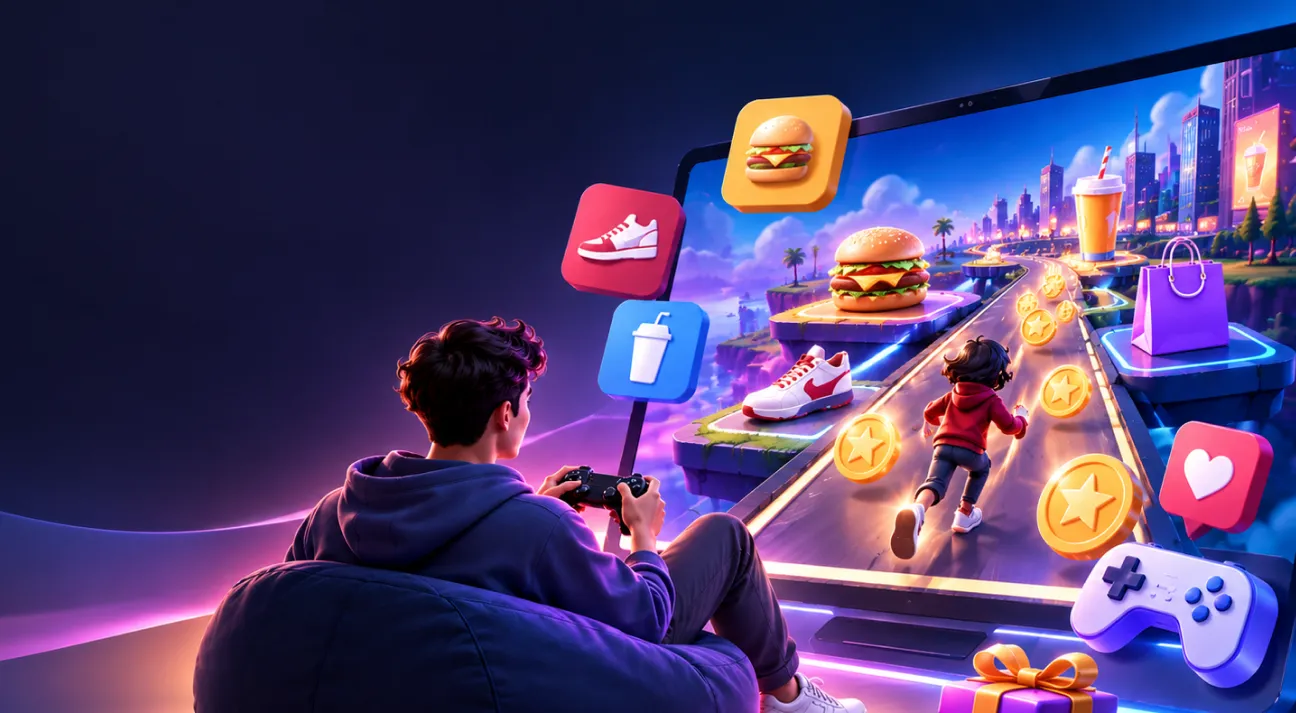
Advergames: How Brands Use Custom Games to Win Attention
Most people scroll past ads without reading them. But people will spend ten minutes playing a game, and some will come back to it the next day. That is why more brands are building games of their own instead of just buying ad space.
A game built to promote a brand, product, or campaign is called an advergame. The idea has been around for decades, but cheaper tools and better engines have made it realistic for far more companies. Today, a food brand, a bank, a sports team, or a school can all launch a playable experience in a few weeks.
This guide explains what advergames are, how brands use them, what they cost, and how to avoid the mistakes that waste budgets. If you are planning one, it also helps to know what a game development company will ask you before they start, so you can come prepared.
- What Is an Advergame?
- Why Brands Use Games for Marketing
- Types of Advergames
- Real Examples of Advergames
- How Companies Use Games for Marketing
- What Makes a Good Advergame
- How Much Does It Cost to Build a Branded Game?
- How an Advergame Project Works
- Common Mistakes to Avoid
- How to Measure the Success of a Branded Game
- Build Your Branded Game With 300Mind
- Frequently Asked Questions
What Is an Advergame?
An advergame is a video game made to promote a brand, product, service, or message. The brand is part of the experience. It might appear as the main character, the setting, the prize, or the goal of the game.
The word is a mix of “advertising” and “game.” Unlike a normal ad, which the viewer watches passively, an advergame asks the player to do something. They tap, race, collect, build, or solve. That action keeps them engaged much longer than a 15 second video.
A few things make an advergame different from a regular game:
- It has a marketing goal, such as awareness, sign ups, or sales
- It is usually free to play
- It is often short and easy to learn
- The brand is built into the gameplay, not just stuck on a banner
Why Brands Use Games for Marketing
Games solve a problem that most ads cannot. They hold attention. Here is why brands keep investing in them:
- Longer attention: A player may spend several minutes in a game, while an ad gets a few seconds
- Repeat visits: Fun games bring people back, which keeps the brand in their mind
- Sharing: Players share scores and challenge friends, which spreads the campaign for free
- Data: Brands can collect sign ups, emails, and play data with permission
- Positive feeling: People associate the brand with fun instead of interruption
- Reach with younger audiences: Many younger consumers ignore ads but happily play games
Types of Advergames
Not every brand needs a big 3D game. The right type depends on your goal, audience, and budget.
Browser games
These run inside a web page with no download. They are fast to build and easy to share, which makes them a popular choice for short campaigns. A studio that offers HTML5 game development can usually deliver one in a few weeks.
Mobile games
Mobile games live on phones, where most casual players already spend their time. They work well for ongoing campaigns and brands that want a long term presence. See how mobile game development fits a campaign if your audience is mostly on phones.
Games inside existing platforms
Some brands build experiences inside platforms like Roblox or Fortnite. Players are already there, so the brand does not have to convince anyone to download anything.
AR and VR experiences
These work well for launches, events, and retail. A player might try on a product virtually or explore a branded world. Studios that handle AR and VR game development can build these for phones, headsets, or in store screens.
Gamified apps and quizzes
Not every campaign needs a full game. A spin to win wheel, a quiz, or a scratch card can lift sign ups with very little build time.
Real Examples of Advergames
A few well known cases show how different the approach can be:
- America’s Army: The US Army released this free game in 2002 to give young people a feel for military life. It is often called one of the most successful advergames ever made.
- Sneak King: Burger King sold this stealth game in its restaurants in 2006, alongside meals. Players took on the role of the Burger King mascot and delivered food to hungry people.
- Nikeland on Roblox: Nike built a branded world where players could try sports, play mini games, and dress their avatars in Nike items.
- Chipotle on Roblox: Chipotle ran a burrito making experience that tied online play to real world rewards.
What these have in common is that the game was fun first and promotional second. People played because they wanted to, not because they were told to.
How Companies Use Games for Marketing
Brands use games to reach different goals. The goal should decide the design, so it helps to pick one main target before you start.
- Brand awareness: A simple, shareable game that spreads fast
- Product launches: A game that shows off a new product in a fun way
- Lead generation: A game that asks players to sign up to save a score or win a prize
- Customer loyalty: A game with rewards that bring customers back
- Education: A game that teaches people about a topic, such as finance or health
- Events and retail: A game people play at a booth, store, or exhibition
What Makes a Good Advergame
A lot of branded games fail because they feel like ads wearing a game costume. These are the points that separate the ones people play from the ones people ignore:
- It is fun on its own. If nobody would play it without the brand, it will not work.
- It is easy to start. The player should understand the game in under ten seconds.
- The brand fits the gameplay. A drink brand might have players catch ingredients. A car brand might have them race.
- It loads fast and runs well. Slow games lose players quickly, especially on older phones.
- It rewards effort. Scores, badges, and prizes give people a reason to keep going.
- It is easy to share. A simple share button can double the reach of a campaign.
Good visuals matter too. Strong art and good level design are a big part of why players stay, and you can read more about how game environment design shapes the way players feel inside a game world.
How Much Does It Cost to Build a Branded Game?
The honest answer is that it depends on the size of the game. A simple browser game costs a small fraction of what a full 3D mobile game does. The ranges below are rough estimates to help you plan, and real quotes depend on your exact needs.
| Type of branded game | Rough cost range (USD) | Typical timeline |
| Simple browser game or quiz | $5,000 to $30,000 | 3 to 6 weeks |
| Casual mobile game | $20,000 to $80,000 | 6 to 12 weeks |
| Branded experience on Roblox or similar | $30,000 to $150,000 | 8 to 14 weeks |
| 3D game or AR experience | $60,000 to $250,000 and above | 3 to 6 months |
Remember that the build is only part of the budget. You should also plan for promotion, because a great game that nobody finds will not help your brand.
What changes the price
- Art style: Simple 2D art costs less than detailed 3D worlds
- Number of levels or features: More content means more time
- Platforms: A game on one platform costs less than one on three
- Online features: Leaderboards, accounts, and multiplayer add work
- Rewards and integrations: Connecting to a CRM, email tool, or prize system takes extra setup
- Timeline: Rush projects usually cost more
- Updates after launch: Ongoing campaigns need fixes and new content
How an Advergame Project Works
Most projects follow the same steps, whether the game is small or large:
- Goal and audience: Decide what you want the game to achieve and who will play it
- Concept: Pick the game idea and how the brand fits in
- Prototype: Build a rough playable version to test the idea early
- Production: Create the art, sound, and full gameplay
- Testing: Check the game on different devices and fix problems
- Launch: Release the game and start promoting it
- Measure and improve: Track results and update the game if needed
Doing the prototype step early saves money. It shows you whether the idea is actually fun before you pay for final art. If you do not have a team in house, you can hire game developers for the length of the project instead of building a full team.
Common Mistakes to Avoid
- Making the brand too loud. Players leave when every screen is a logo.
- Copying a trend without a reason. A game should fit your brand and goal.
- Skipping mobile testing. Most players will open your game on a phone.
- Ignoring promotion. Budget for ads, influencers, or social posts to bring people in.
- Making it too hard. Casual players quit after a few failed tries.
- Forgetting privacy rules. If you collect emails or data, follow the laws that apply to your audience.
- Having no way to measure results. Set your tracking up before launch.
How to Measure the Success of a Branded Game
Pick two or three numbers that match your goal and check them often. Here are the most useful ones:
- Number of plays and unique players
- Average time spent in the game
- Return rate, meaning players who come back
- Shares and social mentions
- Sign ups or leads collected
- Sales or coupon redemptions linked to the game
If a number is low, the fix is usually simple. Short play time often means the game is too hard or slow to start. A low share rate often means the share button is hard to find.
Build Your Branded Game With 300Mind
At 300Mind, we make games for studios, startups, and brands across mobile, PC, and browser. Our team works in Unity and Unreal Engine, and we handle everything from the first idea through art, development, testing, and launch. If you have a campaign in mind, we can help you figure out what kind of game suits it.
Frequently Asked Questions
An advergame is a video game made to promote a brand, product, or message. The brand is built into the game, for example as the main character, the setting, or the goal. Advergames are usually free to play and short, and they aim to build awareness, collect sign ups, or drive sales. Famous examples include America’s Army and Burger King’s Sneak King.
Companies use games to hold attention for longer than a normal ad, bring customers back, collect leads, and get people to share the brand with friends. Some build their own browser or mobile game. Others build branded experiences inside platforms like Roblox. The goal can be awareness, a product launch, loyalty, or education.
A simple browser game or quiz can cost roughly $5,000 to $30,000. A casual mobile game often falls between $20,000 and $80,000. Larger 3D or AR projects can start around $60,000 and go well above $250,000. The final price depends on art style, features, platforms, and timeline, so a quote based on your brief is the best way to get a real number.
Simple games can be ready in three to six weeks. Casual mobile games usually take two to three months. Bigger 3D or AR projects can take three to six months. Starting with a quick prototype helps you avoid delays later.
Yes. Most casual play happens on phones, so mobile is often the best home for an advergame. Browser games also work well on phones as long as they load quickly and fit small screens.
No. Small and mid size brands can get strong results from short browser games, quizzes, and spin to win campaigns. The key is to match the size of the game to the size of the goal.
It depends on the project. Unity is a common choice for mobile and cross platform games. Unreal Engine suits high end 3D visuals. Browser games often use HTML5 tools. A good studio will pick the engine that fits your goal and budget.